Building an Autonomous Future (ICCV 2025 WDFM-AD)
Contents
Ashok Elluswamy, VP, Tesla
Recently Achievements
- 2025.06, launch robotaxi service
- deliver the first self-driving production vehicle from the tesla factory in austin to customer’s home in austin (20-30 minutes).
- in the us, the production vehicle delivers itself from the manufacturing line to the loding docks (a couple miles away).
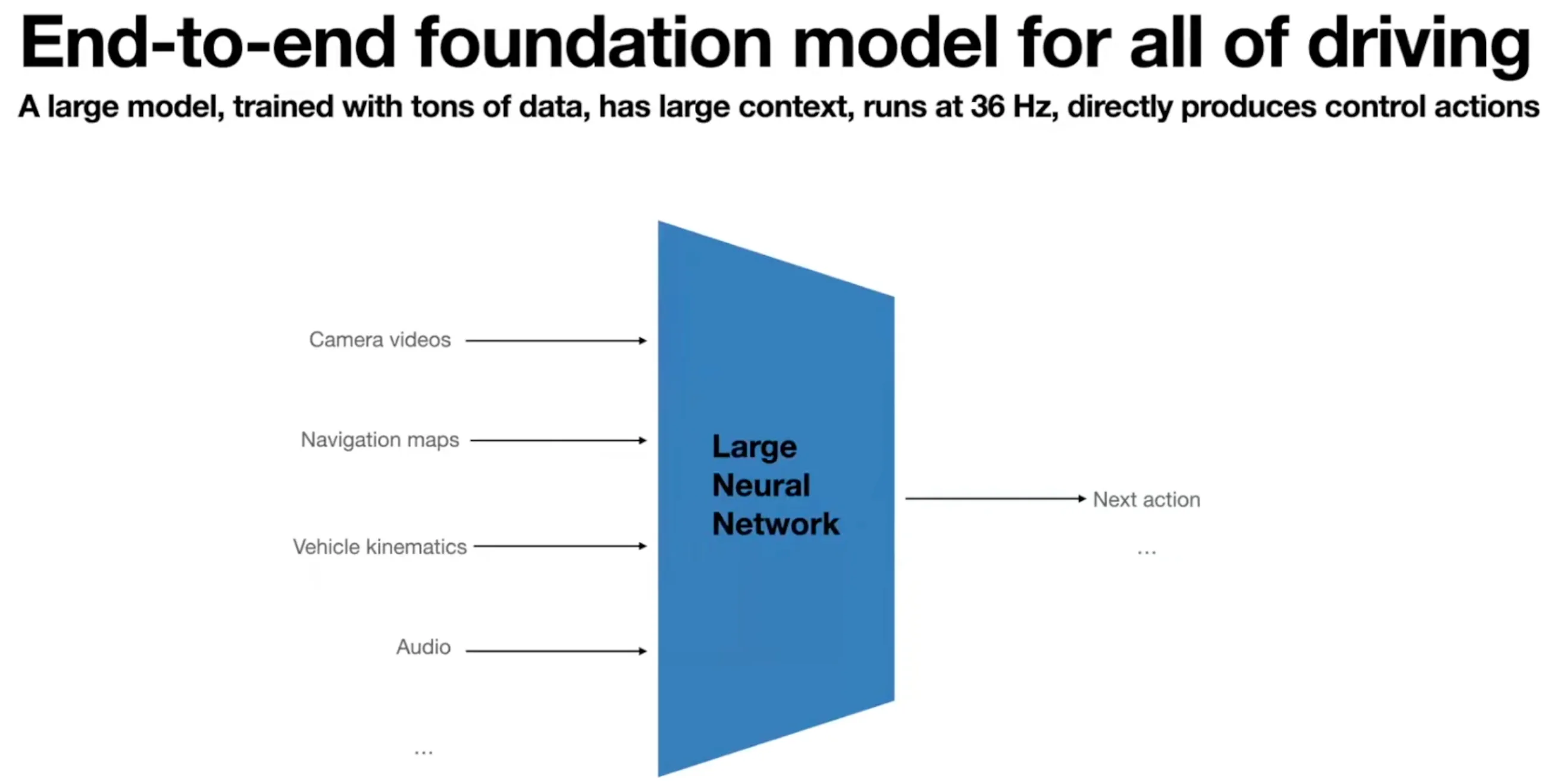
End-to-End Foundation Model at Scale
- Map raw sensor inputs directly to control signal (next steering and acceleration (two tokens) -> steering angle, throttle, brake)
- Runs at 36Hz
- Perception can be implicit and can be trained as auxiliary things
Why End-to-End?
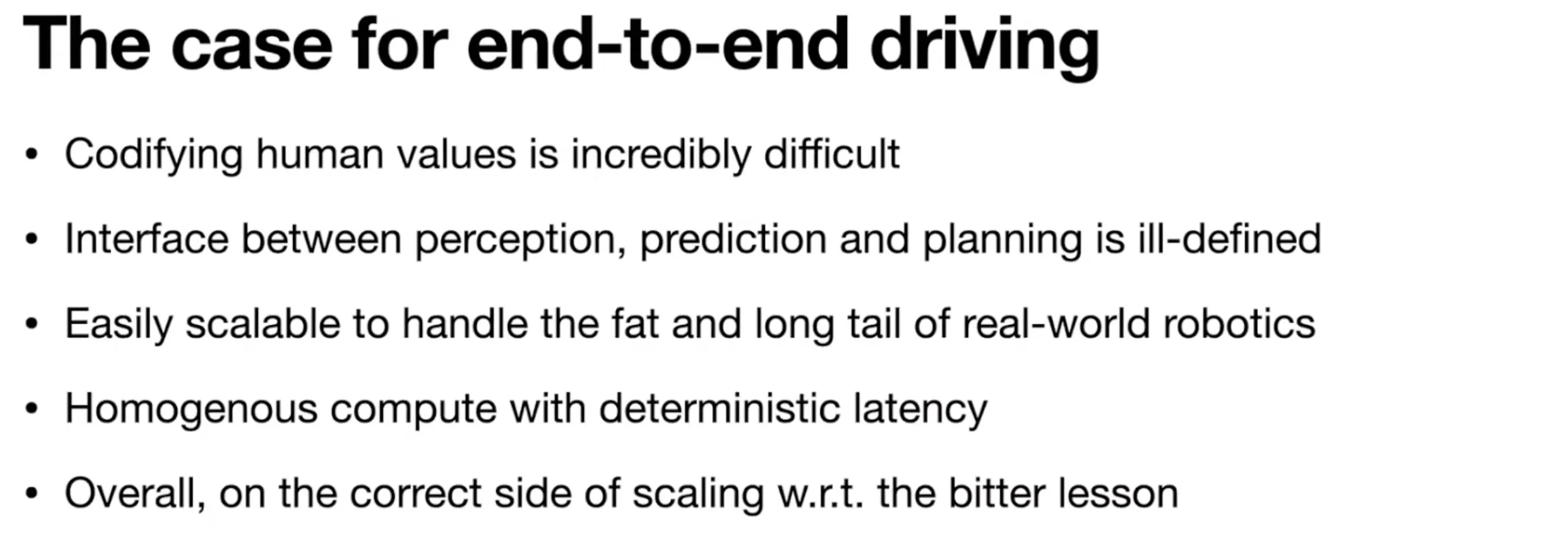
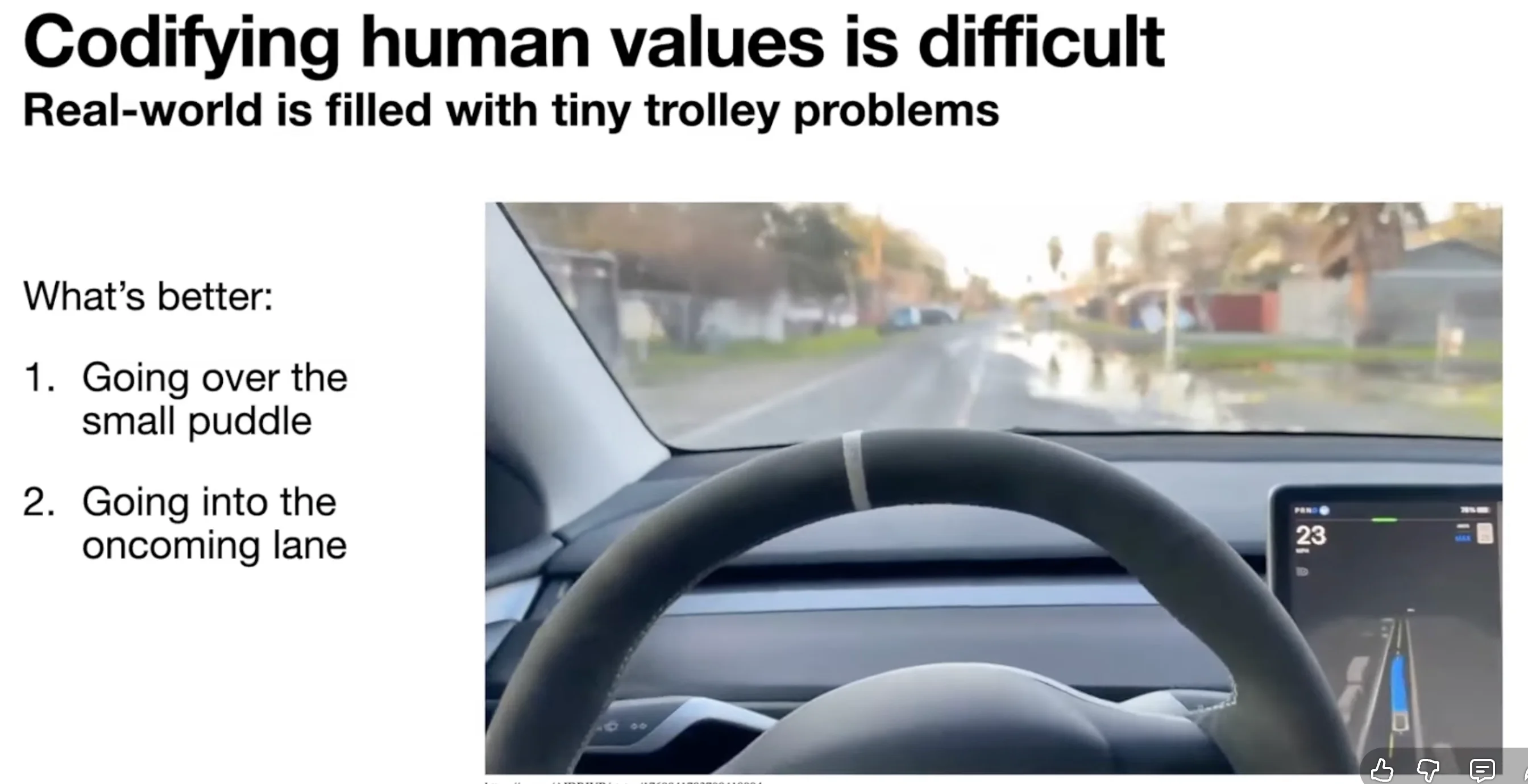
Codifying human values is incredibly difficult
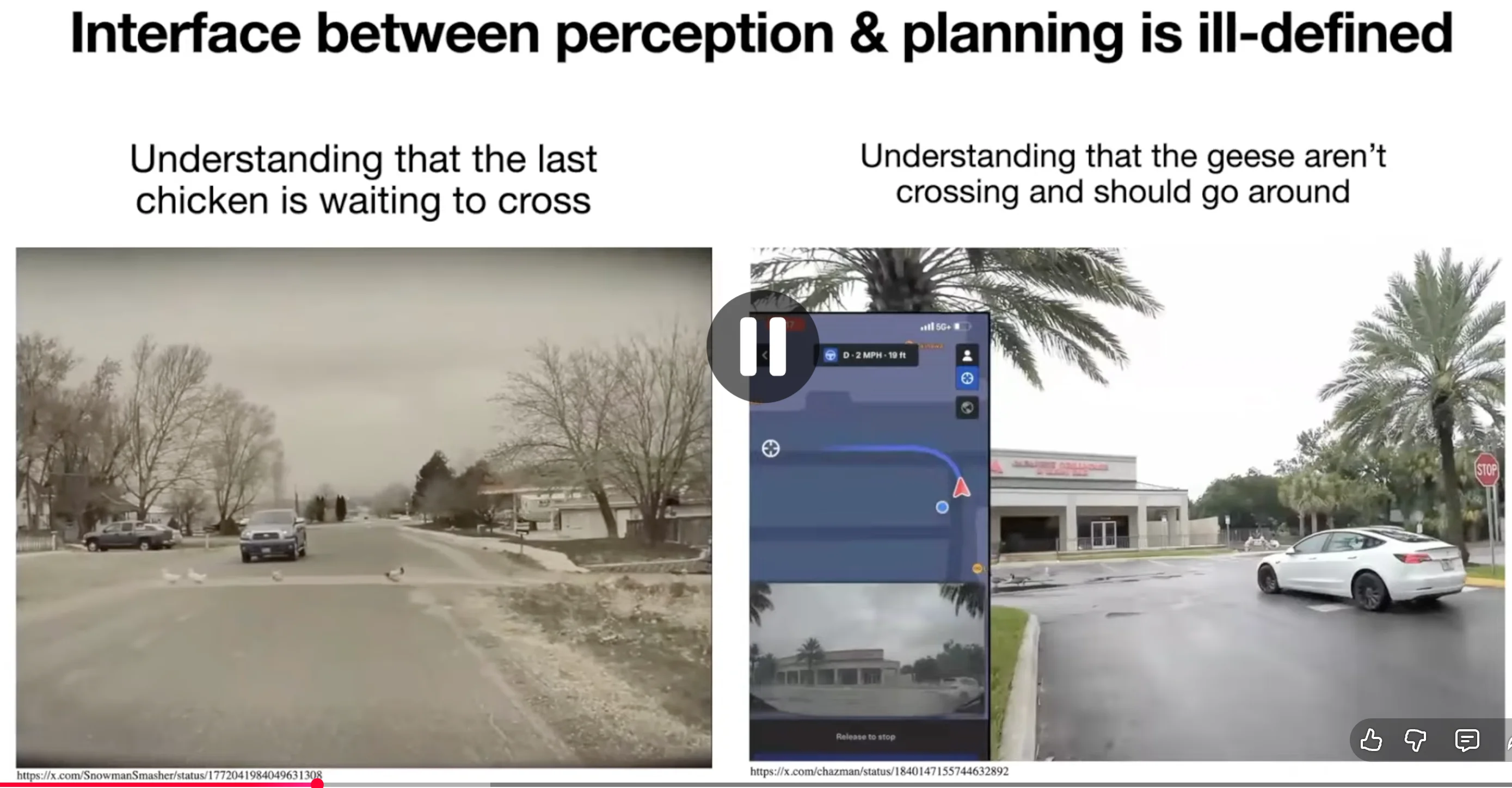
Interface between perception, prediction and planning is ill-defined
Challenges of End-to-End
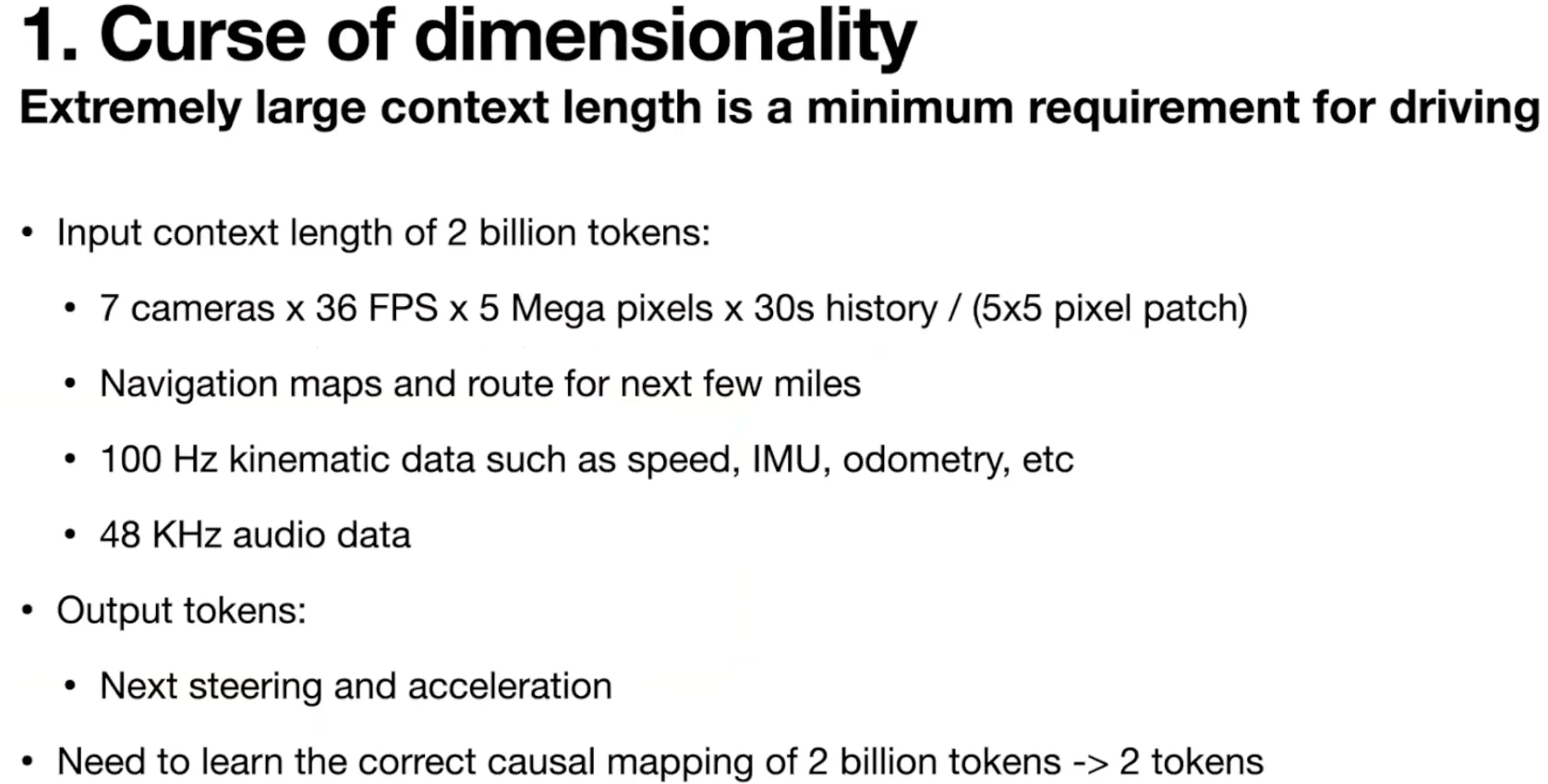
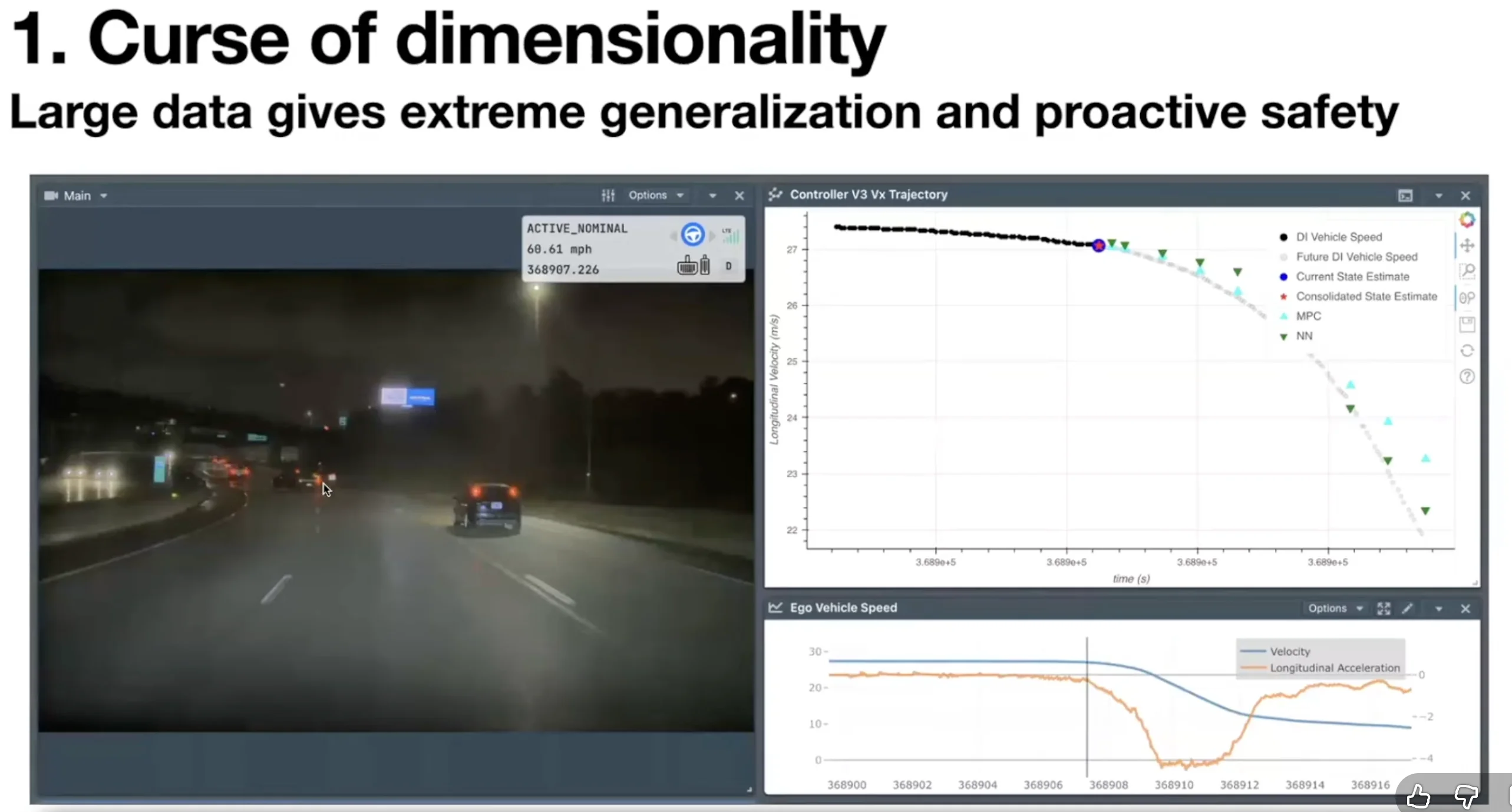
Curse of dimensionality
- Problem: scale mismatch between input and output
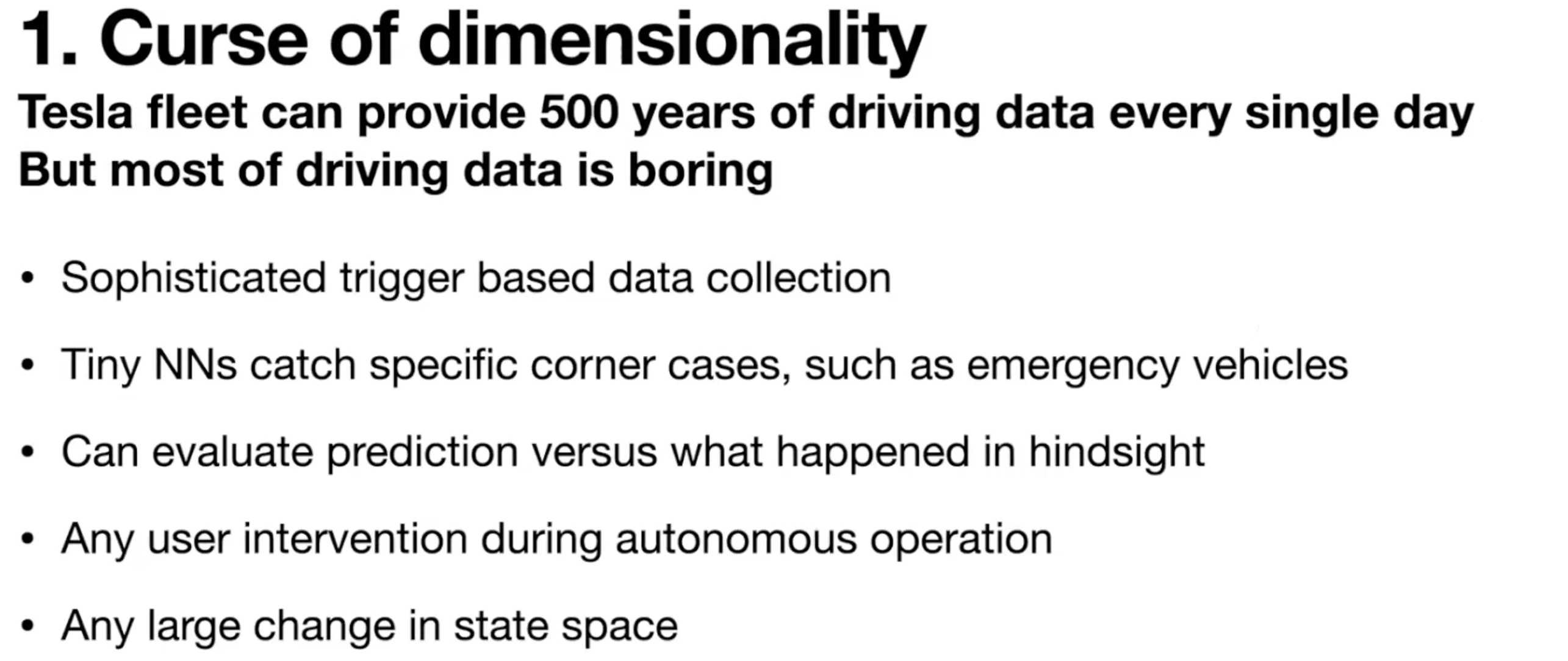
- Solution:
- large data: Tesla fleet can provide 500 years of driving data every single day.
- data engine
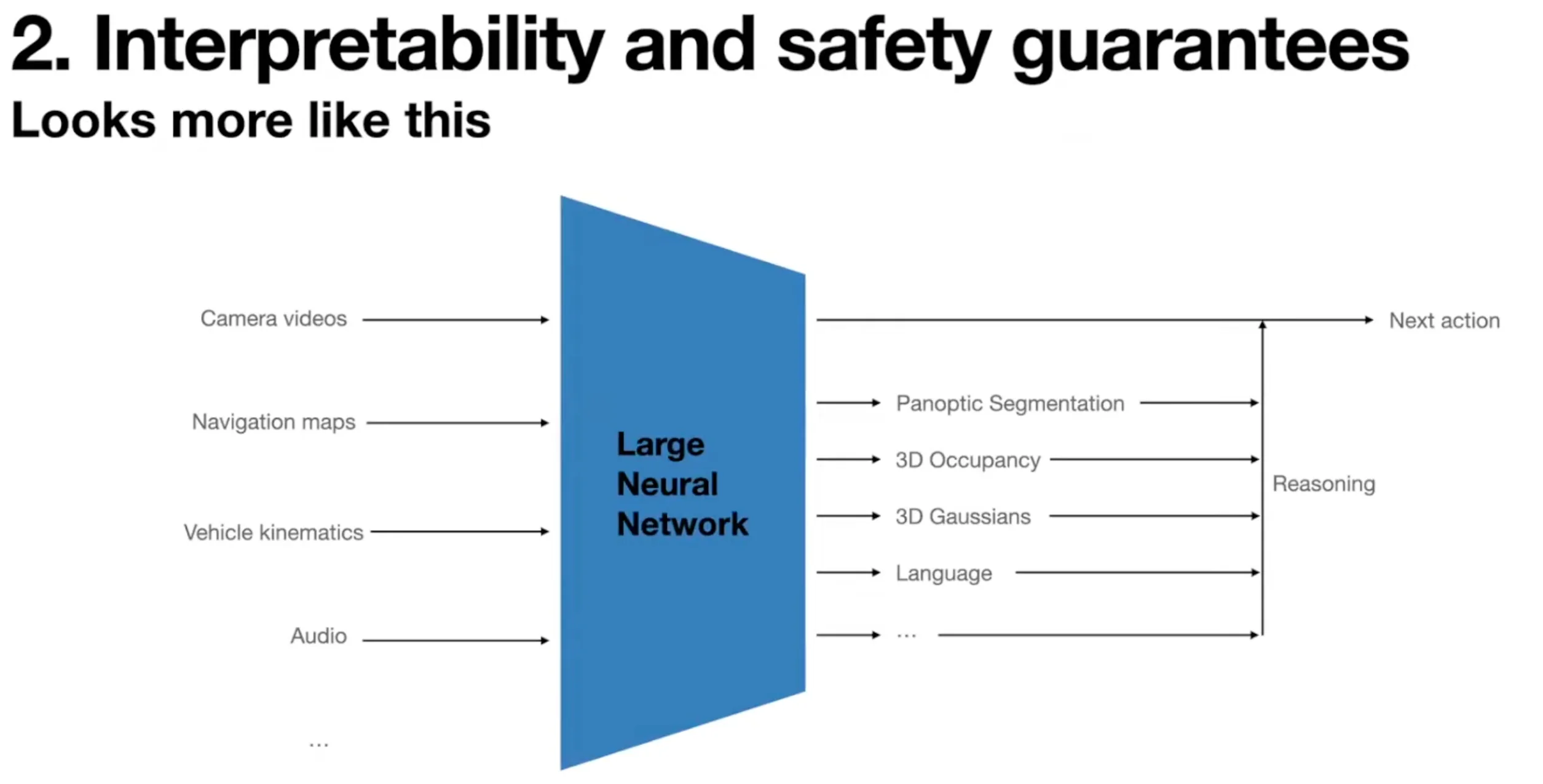
Interpretability, Safety Guarantees and Internal Supervision
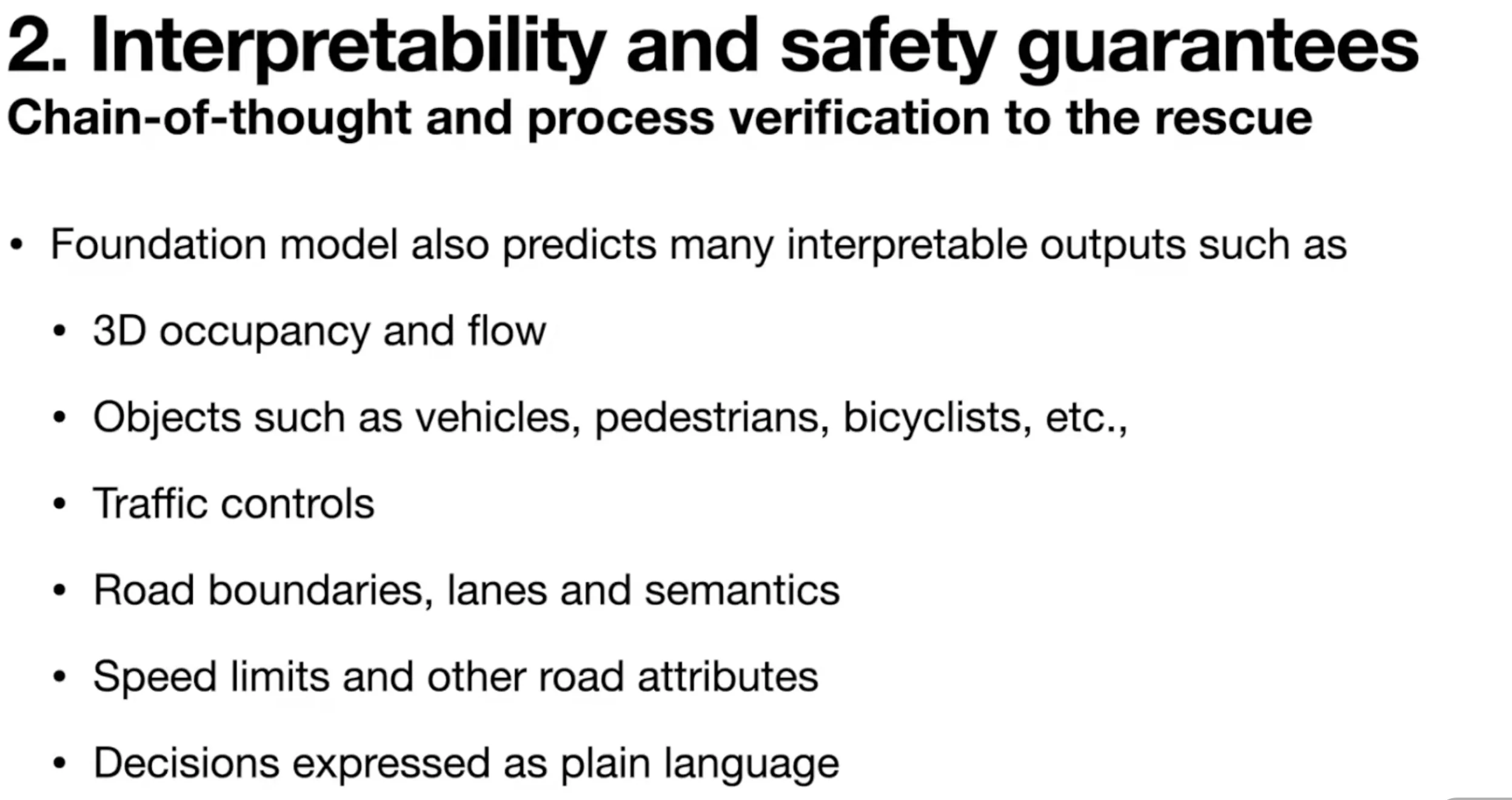
Rich Intermediate Outputs: Perception, 3DGS, Language
- with prompts
- auxiliary but helpful
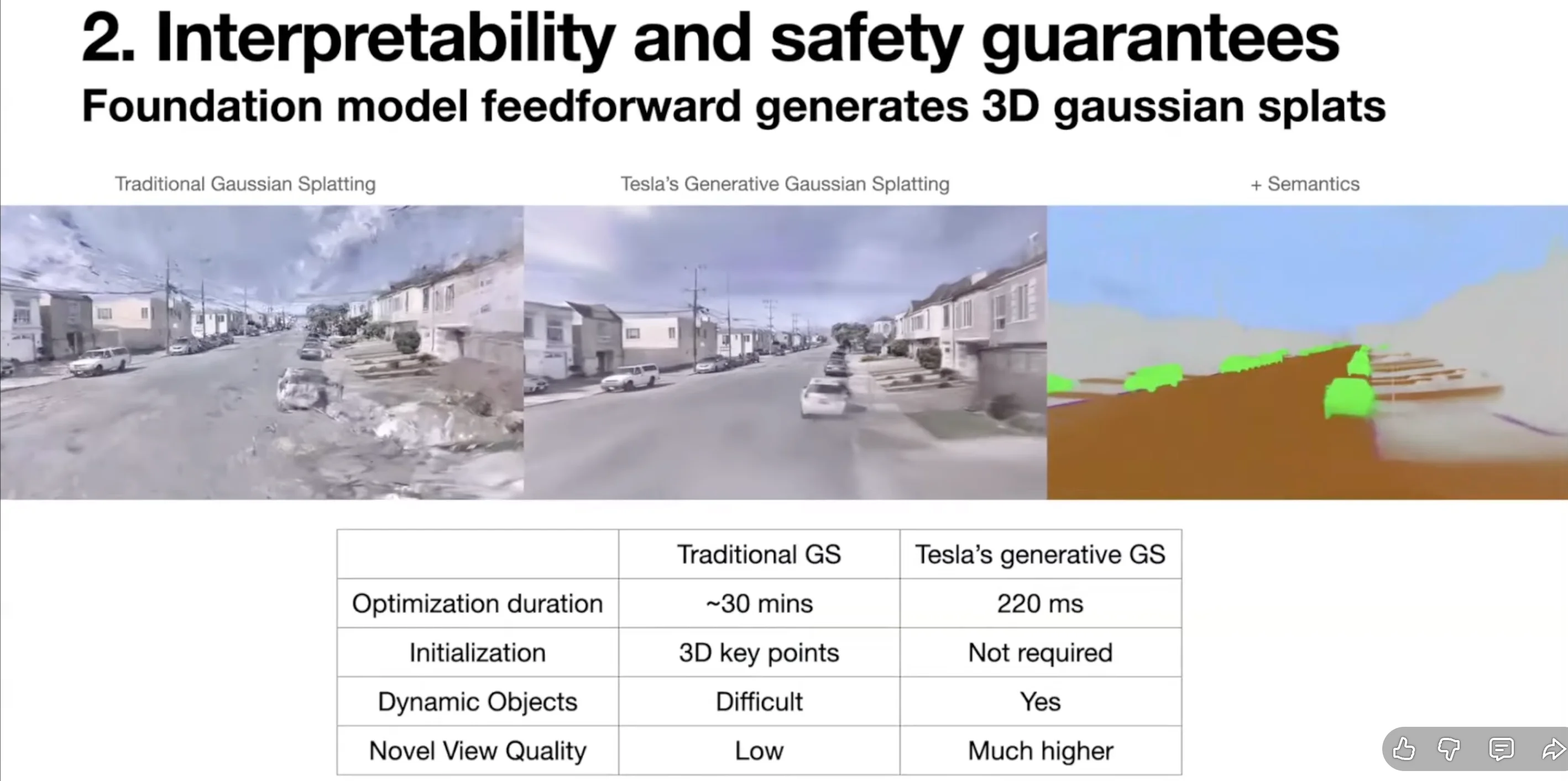
Efficient 3D Gaussian Splatting for System Debugging
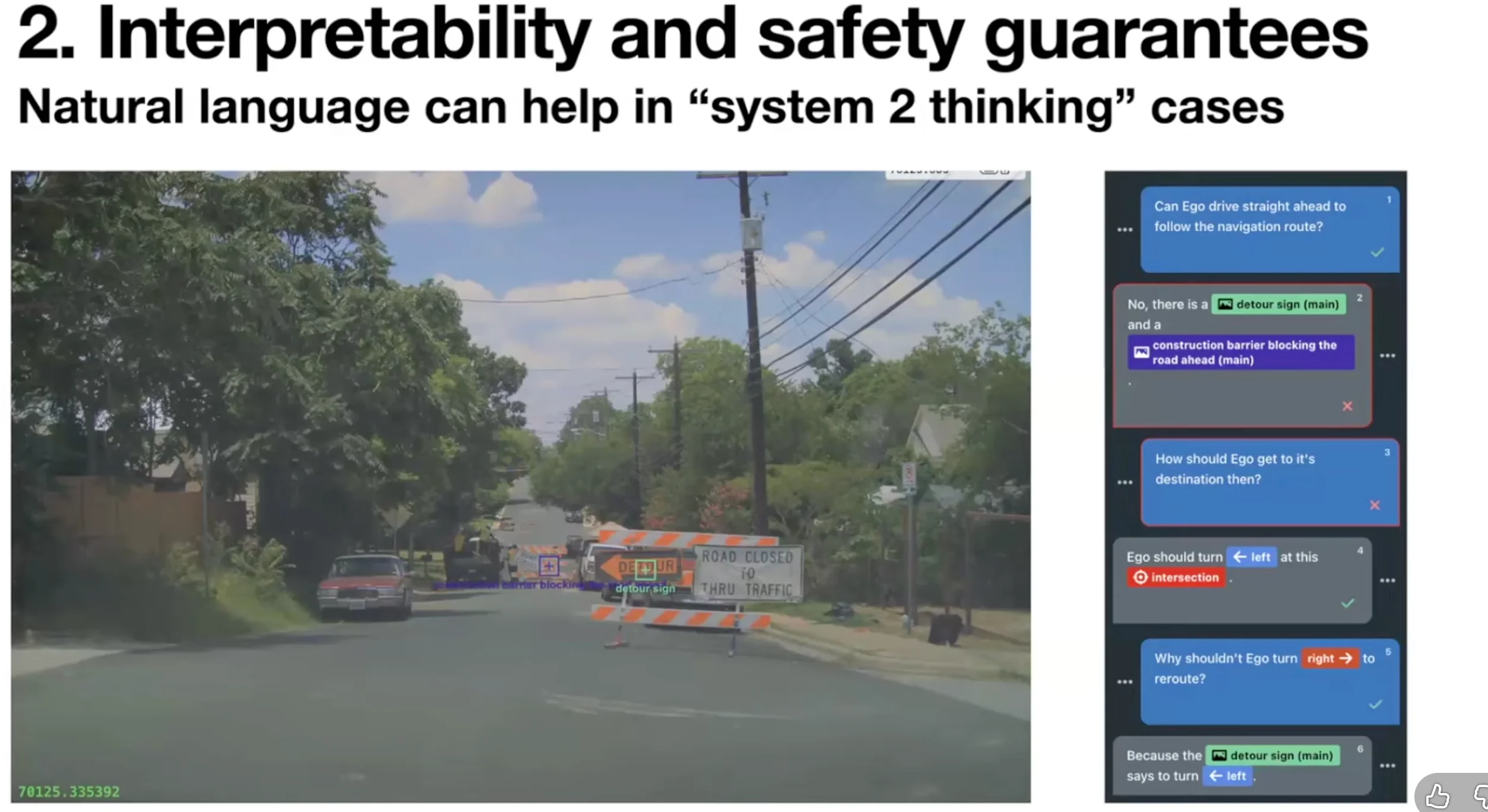
Real-Time and Reflective Modes in a Single Model (Dual-Mode)
- A fast path for low-lattency control, used in normal driving
- [optional] A reflective mode for introspection, where the model can emit reasoning tokens and natural language summaries of its decision logic when more time is available.
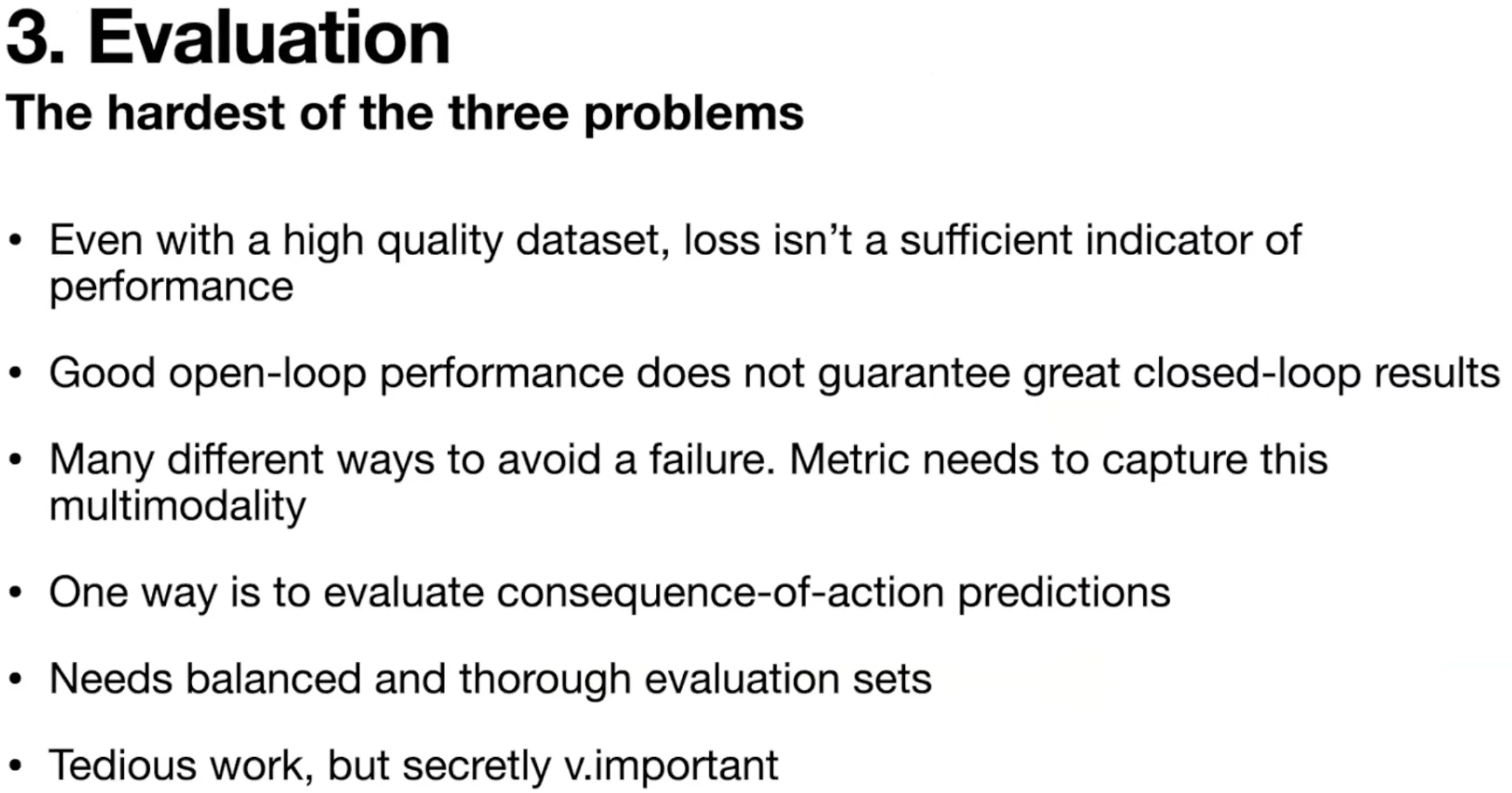
Evaluation (Hardest of All)
- Training loss and open-loop metrics can not indicate closed-loop performance.
- Safety-critical driving policy is multi-modal, and can not be judged by distance-to-ground-truth alone.
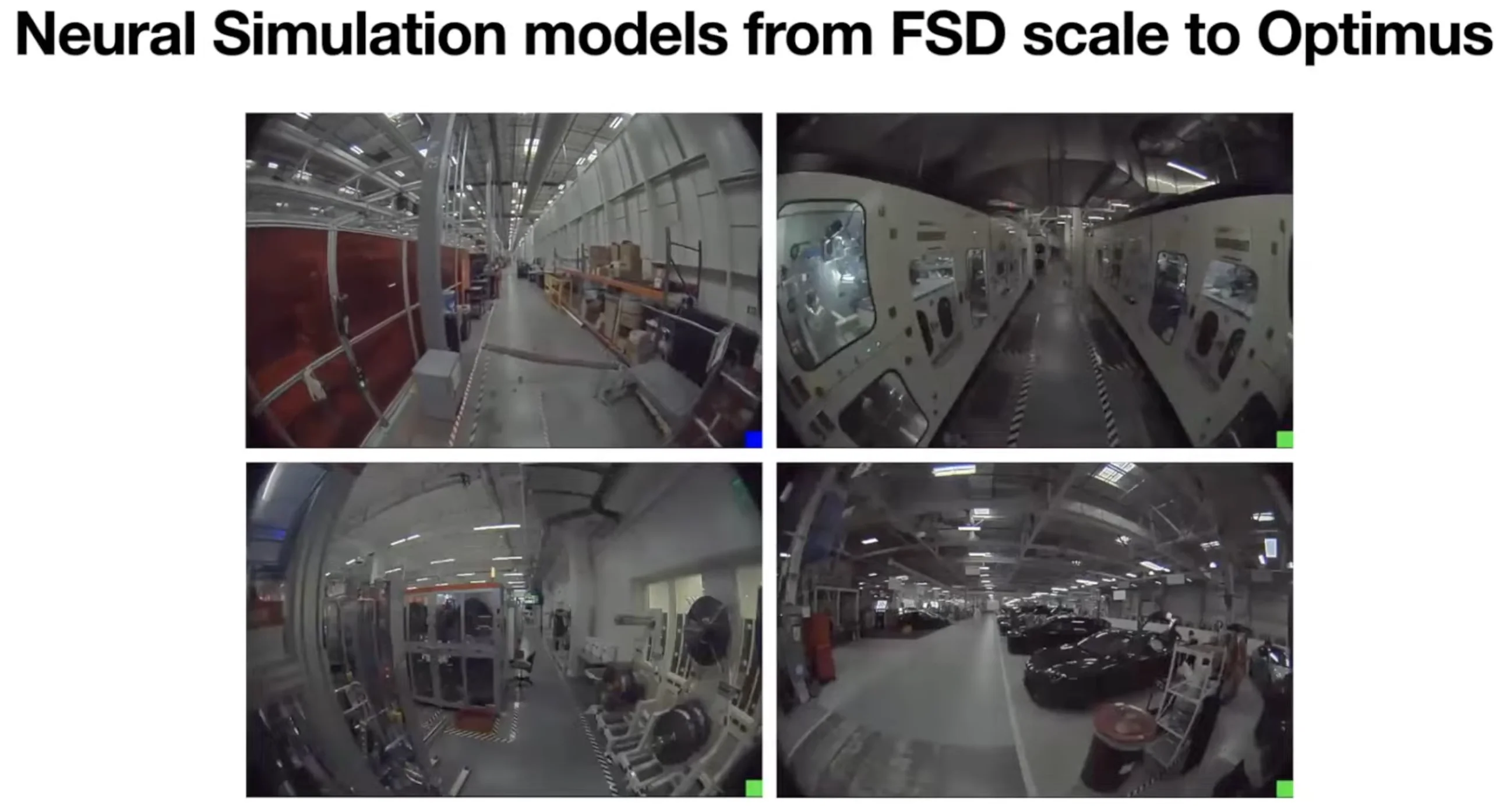
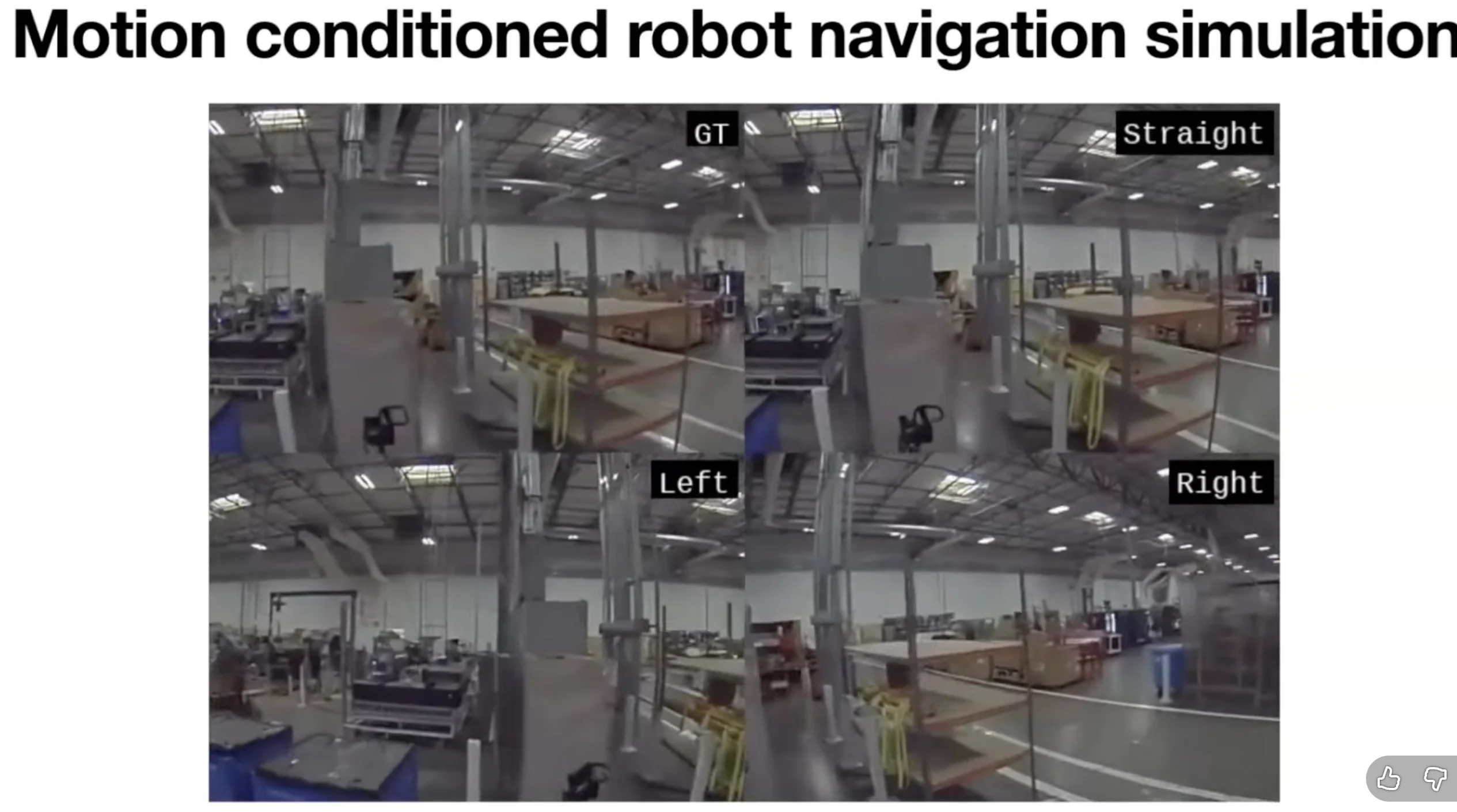
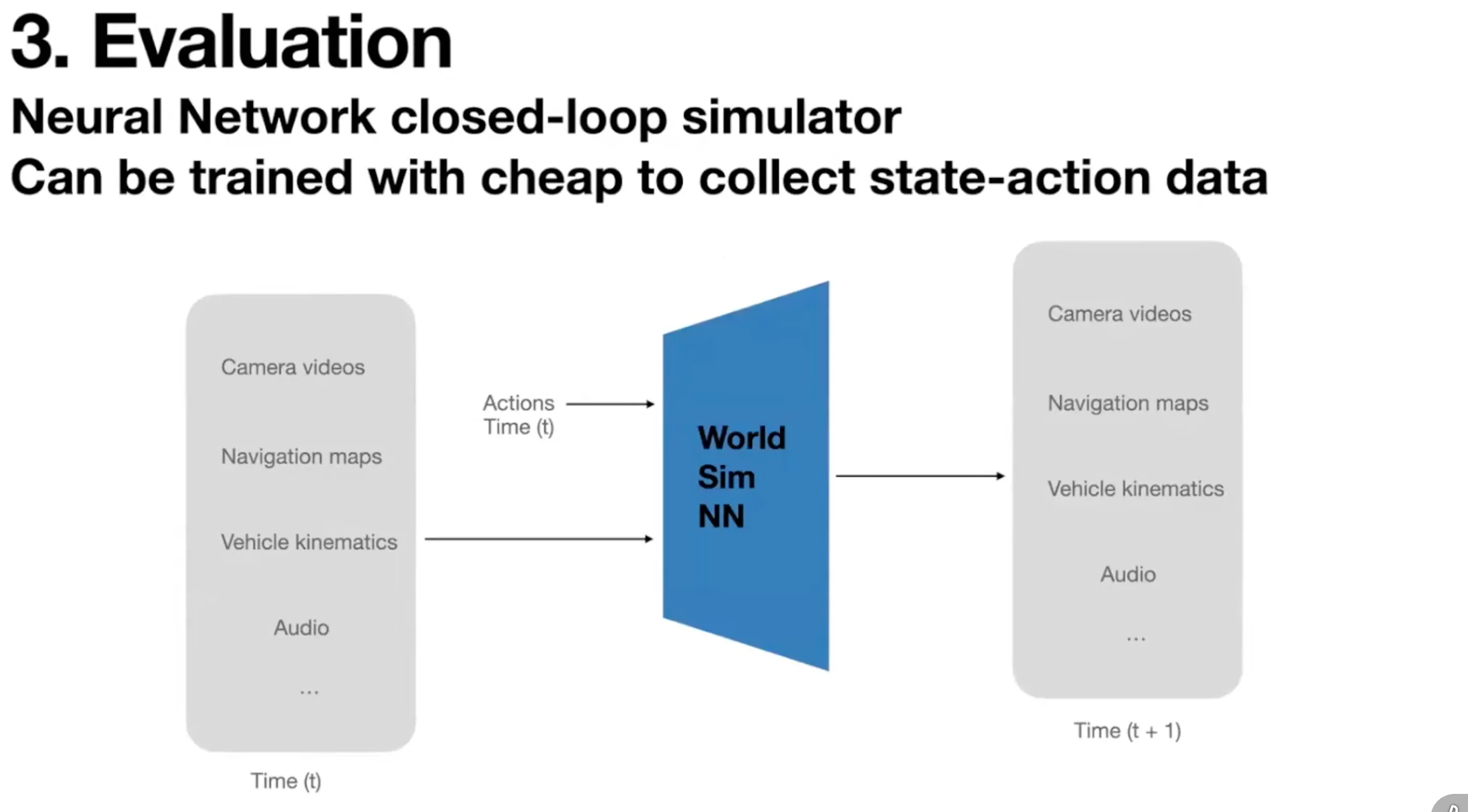
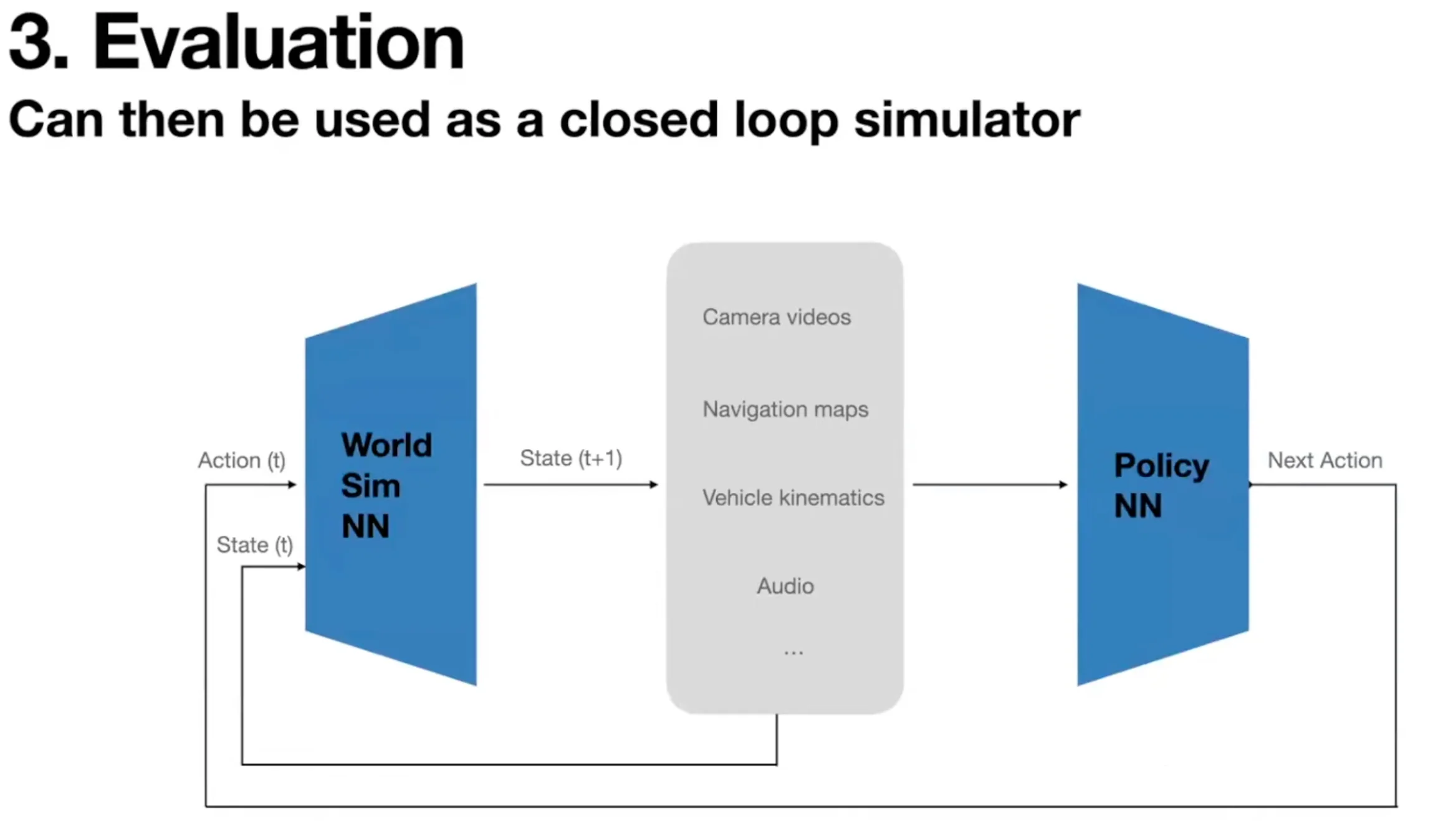
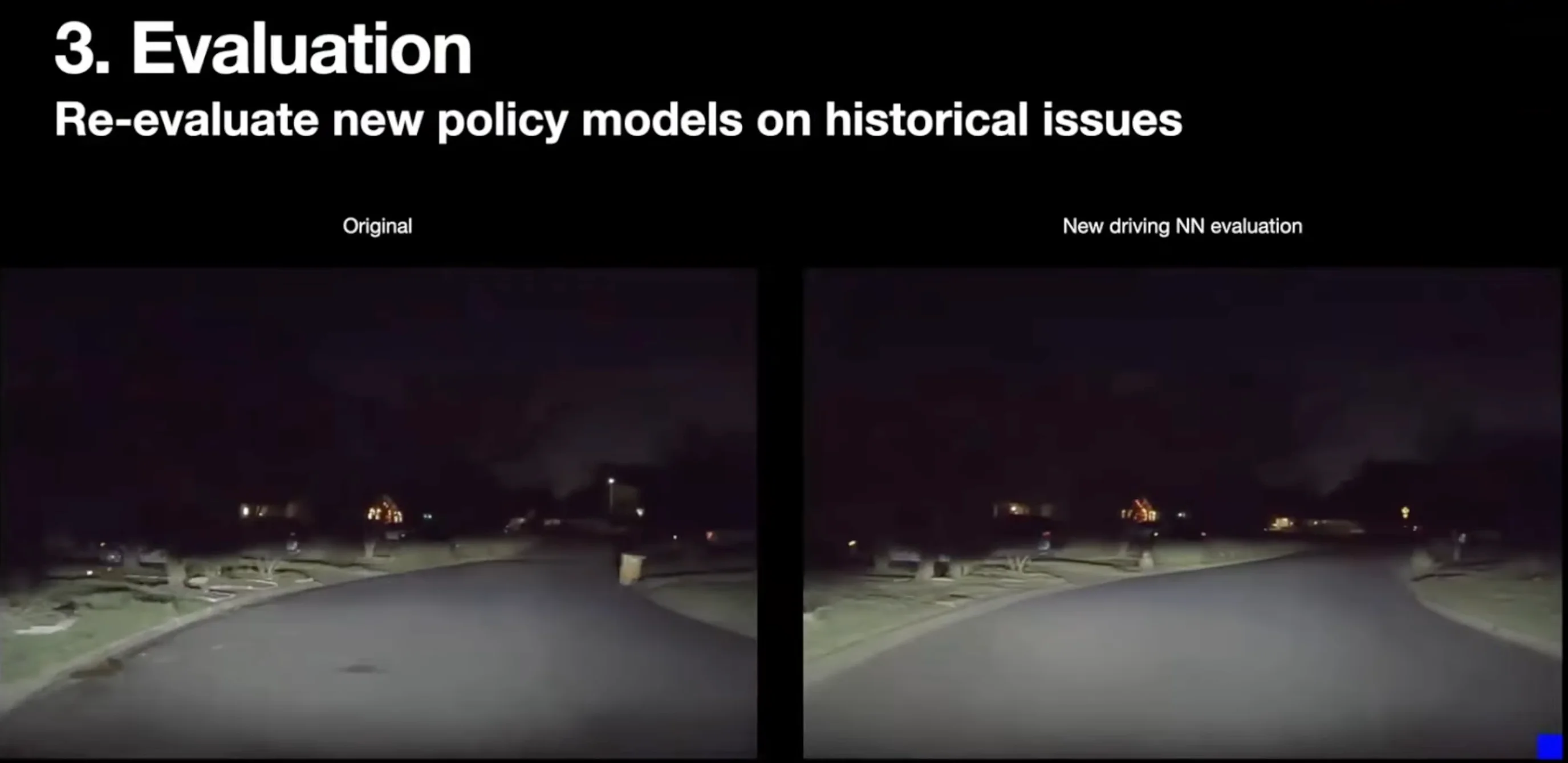
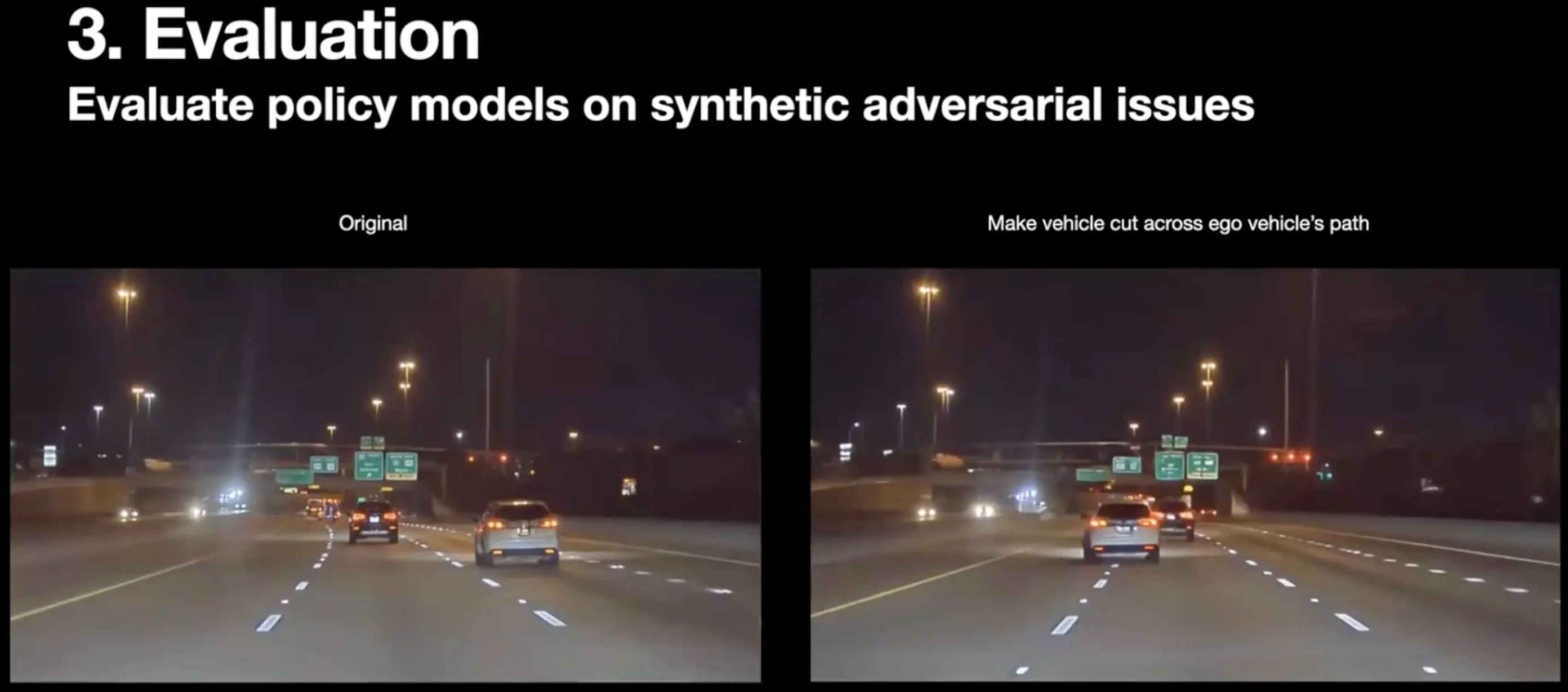
Neural Network Closed-loop World Simulator
- closed-loop evaluation
- closed-loop reinforcement learning
What’s Next